Mark Higgins Interview with Rational Reminder Podcast: Learning Market History

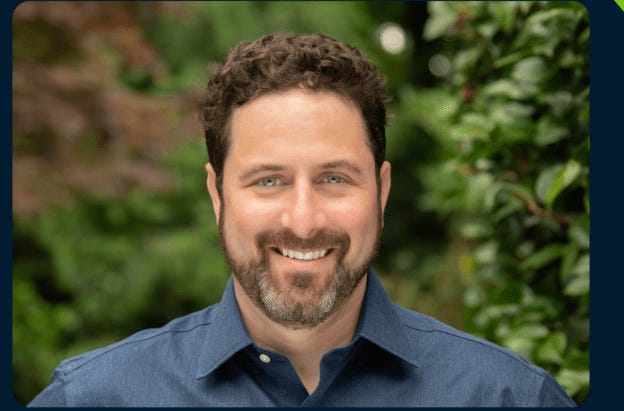
When the Trustees go on conferences to exotic places like Hawaii or Key West, they don’t hear from the experts who question exotic investments like private equity or private credit. They hear from those who promote very costly and underperforming private equity and private credit.
So people like Mark Higgins, whose name was mentioned at the last Chicago Teachers’ Pension Fund Investment Committee meeting, is one dissenting voice the Trustees need to hear to get the full picture of pension investments.
“It just seems universally accepted that private markets will help diversify your portfolio, will add to your returns when a lot of evidence says that’s not true,” Mark Higgins told the Rational Reminder podcast interviewers. “But even if it was true, that attracts so much capital that it becomes untrue and it’s very concerning.”
Mark Higgins is another important name in the world of public pension fund investing. He was interviewed by two Canadian investment executives Ben Felix and Cameron Passmore who focus on sensible investing. Higgins who works as an investment consultant has a great historical perspective about the markets. He works with the CFA Institute that provides finance education for investment professionals and he wrote a book published in 2024 entitled U.S. Financial History: Understanding the Past to Forecast the Future. The book recounts the financial history of the U.S. starting with Alexander Hamilton in 1790 and ending with the Federal Reserve battle to contain inflation today.
“When Covid hit everything I thought was unprecedented,” he told Rational Reminder. “The more I read the more I realized about the history of financial markets. So when COVID hit in March 2020, like everybody, I thought everything that was happening was completely unprecedented. We were quarantined. So I started reading financial history books and the more I read the more I realized that there’s almost nothing that happens in financial markets that is unprecedented. It just seems that way because nobody looks back far enough. And you know I realized that the panic of March 2020 was much like the June 1914 panic when World War I came out of nowhere.”
He said he was able to use this information to calm down his clients and give them a sense of what was happening at that time. He noted how natural disasters were often related to financial crises in the past like they are today. In 1815 when Mount Tambora erupted it cooled the Earth for a couple of years which caused crop failures in Europe more than the United States. Wheat and cotton prices skyrocketed and then farmers in the U.S. started aggressively buying farmland in the Midwest. But when global temperatures recovered, there was a glut of wheat and cotton, so prices collapsed. The people had leveraged themselves irresponsibly and that’s what led to the panic of 1819 and the depression that followed.
“And that’s what makes me very concerned about some of the things that are happening in private markets right now,” Higgins said. “I shudder to say this, but it concerns me more than crypto because nobody believes it’s possible.”
He said bubbles are hard to predict, but he is worried that massive amounts of capital are moving into private markets. “There are a lot of crypto skeptics, (but) there aren’t that many private market skeptics that I’ve seen.”
He noticed like Jeff Hooke, who we featured in our last article, that the staff of pension funds specialize in private markets like private equity and private credit “so their career really depends on continuing it.”
You have consultants that the more complexity they add to a portfolio, the more they’re needed, the more fees they can charge
“You have consultants that the more complexity they add to a portfolio, the more they’re needed, the more fees they can charge,” Higgins told the podcasters. “Advisors, the same thing. And it just gets passed along the chain and nobody realizes how dangerous the stuff is that comes out on the other end.”
“The historical origins of the many flawed practices are still so common in the investment industry today,” Higgins said. “The interesting thing is when you study a couple hundred years you start seeing big currents don’t change that often. You miss them if you’re just living in the moment (of) active management. So, if you go back to the gilded age and even the early 1900s before the Securities Exchange Act, the way you really made money on Wall Street (was) market manipulation, insider trading, and if you can get away with it, securities fraud. And that changed with the Securities Act of 1933 and the Securities Exchange Act of 1934. So, I mean, you could still manipulate the market, but you were taking legal risks.”
“So that was really the birth of active management. And what is interesting is it didn’t take long before it was clear, it’s probably clear to the market manipulators before the act, the Securities Exchange Act, that it was really hard because there are so many smart people all looking at the same public information. It’s just very hard to figure out something that is different and right in a way that is better than everybody else.”
What do you think are the most important lessons from US financial history for people who are making financial decisions today, the Canadians asked.
“I think what I tell people is the most important lesson is that almost nobody can outwit the market, both in terms of timing or security selection. So the best approach is to have an allocation that makes sense for your time horizon. I’m assuming here that it’s a long time horizon, but if it’s a short time horizon, you know, you can’t take as much risk. And use low-cost index funds for implementation unless you are a very rare breed and almost everybody isn’t.”
One thing Wall Street does not like is regulation. He said the trend toward active investing with private equity and hedge funds started about 45 years ago in the 1970s when computers started to make a splash and companies were having trouble getting venture capital firms to fund them. One of the reasons was trustees at pension funds and insurance companies were worried about the Dept of Labor’s interpretation of the Prudent Man Rule which essentially prevented them from investing in anything that had a high likelihood of major loss. So the national venture capital association launched a big lobbying effort to change that interpretation, which successfully passed in 1979. “And then you saw a flood of capital going to venture capital and also buyout funds, so it really took off in the 1980s.”
Why are public pension funds across the country so heavily invested in alternatives (PE or private credit) in recent history? “I think that the trigger was the people chasing (super high) returns, but now you have a situation where you have consulting firms that can increase their fees and kind of entrench themselves with organizations by making portfolios more complex. Now, do they do this consciously? Some probably do, but a lot it’s just subconscious. You have staff at major pension funds and endowments and foundations whose entire career is built on you running an alternatives portfolio.”
Higgins said there is a misperception that just allocating to alternatives is going to get Funds better returns and better diversification, but there’s a lot of evidence that that’s not true. And even if it was true, the more funds you allocate in this alternatives sector the less likely you will get great returns because of the increased competition.
In the early 1900s before the Securities Exchange Act, the way you really made money on Wall Street (was) market manipulation, insider trading, and if you can get away with it, securities fraud … So that was really the birth of active management.
He said it sounds complex, but it really isn’t. “The analogy I use is like if you saw on Zillow that a house was worth $1.3 million, you bought it for a million probably because it’s worth a million, and then immediately mark it up to 1.3 million and brag to all your friends that you just made 30%. That’s essentially what’s happening. And what makes it a fundamental structural flaw is that the only way to continue generating these returns is to keep buying incrementally larger amounts of secondaries. And (with) that kind of formula eventually you run into problems when the money runs out and the money will run out because you have to keep buying incrementally larger amounts of money. The question is when. I don’t know.”
Higgins talked about how Wall Street changed the way incentive fees were paid out. They used to do it based on when the assets were sold, which made sense. “But they changed the rules so you could pay the incentive fees out just based on the markup. And I mean, think about that. So, imagine if you got your friends to invest with you. You spent a million dollars on a house that Zillow said was worth 1.3 million last week. You mark it up to 1.3 million and then pay yourself an incentive fee for getting a monster return. That’s what’s happening.”
He echoed Hooke’s thoughts that the media feeds into the hype because the PE firms own the media. “So there’s very little skepticism and when you have very little skepticism with a massive capital inflow then that is very scary.”
“I remember reading about the fees that they charged for investment companies in the 1920s and 1930s, and I was just like, this is ridiculous. They would have a commission on a load essentially of 7%. The annual fees would be, you know, one and a half percent. And there also (were) some other fees, but anyway, it amounted to like 5 percent a year for a lot of these funds. And I was thinking to myself, wow, I can’t believe that happened. We’ll never see those days again. Well, we have. You know, you look at some of these Evergreen funds and with their management fee, with their incentive fee, there’s an added cost to have custody. Then you have the underlying fees of 2 and 20. I mean, you’re talking 5 or 6 percent. Like, I don’t know how you could possibly argue that paying that they’re going to generate enough value over five or 6 percent a year to warrant (the) investment. It’s mindboggling.”
“That’s the thing that always amazes me is there’s so little skepticism about it and I think that the simple answer is they’re just surrounded by consultants, by advisors, by staff, by the trade media, all saying the same thing. Yep. And it’s hard to dissuade them of that. And the funny thing about it is that trustees of institutions are very resistant to doing something very different than the norm and the standard. So if you go out on a limb and you get it wrong, there’s a lot of reputational risk. The irony of that is if you’re going to be like everybody else, then the only sensible way to go is to index everything, right? Because you have to if you’re going to outperform your peers, you have to be different, probably most likely you have to be early and you have to be right. So if you’re doing what everybody else is doing by allocating to, you know, heavily to alternatives and in the same places, by definition, you’re not early, definitely not different, and you’re almost certainly wrong. So it’s a completely self-defeating strategy, and it’s not that hard to see if you open yourself up to that possibility. If you’re gonna be like everybody else, the only sensible thing to do is to index.”
“I believe that there is a market for truth,” Higgins said. “Not that I know it perfectly, but if I strive to tell it to the best of my ability. I think I’m doing something good that I can feel good about.”
And let’s hope our Chicago Teachers’ Pension Fund can do the same thing!